

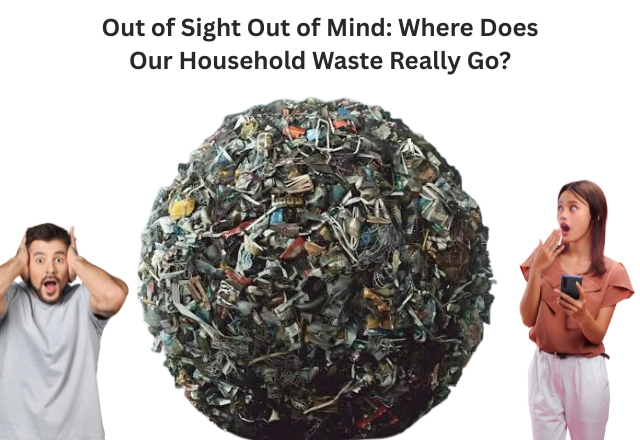
Have you ever really stopped to think about what happens to your trash after the garbage truck comes?
Most people don’t. They throw away a chip bag, a plastic bottle, leftover food, and any packaging they don’t need anymore into a bag, put it outside, and then go about their day. The second it’s out of sight, it is also out of mind.
But here is something that is not usually mentioned: throwing something away does not make it disappear. It just moves to a place. Depending on what is being thrown away and how it is handled after that, that waste can keep causing problems for the environment long after we have completely forgotten that we ever threw it away.
So Where Does It Actually Go?
The journey usually starts with your garbage can. From there, it might go to a sorting center, a recycling place, a composting site, or a landfill depending on your waste system and what kind of waste it is.
Some things get a chance. Paper, metal, glass, and some plastics can be taken back. Used again. Food scraps and garden waste can sometimes become compost. Here is the hard truth. Not everything that you put in the recycling bin actually gets recycled.
Once different types of trash mix together, it becomes hard to sort. Food leftovers pollute paper and cardboard. Some plastics are not worth the time or money to process. Whatever cannot be reused usually ends up in a landfill. That is where things get much bigger than a single bag outside your house.
Why This Actually Matters
Take a bottle. You use it for a minute, maybe even less. Making it requires raw materials, energy, manufacturing, and transportation. An entire chain of events for something that is gone in seconds. Once it is thrown out, if it is not properly collected and managed, it can stay in the environment for a long time.
Plastic that is not disposed of correctly can flow into drains, rivers, and eventually oceans. It hurts animals along the way. Breaks down into tiny pieces, which is a whole new problem.
Food waste causes problems in a way. When it rots in a landfill without air, it produces methane. A gas that contributes to climate change. It is not just the waste itself. Every time edible food is thrown away, all the water, land, energy, and work that went into making it also get wasted.
Then there is dumping and burning, which pollutes the earth and water and sends bad smoke into the air when trash is burned instead of being handled properly.
The bigger idea here is that waste does not stay in one place. What starts as a bag outside your home can spread out and affect an entire neighborhood or even more.
Why Recycling Is Not Enough On Its Own
We have all been told that recycling is good for the planet. It is.. It is not a complete solution.
Not every material is easy to recycle. Many products are made from materials that are hard to separate. Even items that can be recycled might not be taken back if they are mixed with things or if the area does not have the right places to process them.
That is why reducing waste before it even becomes waste is so important. Using a bottle cuts down on single-use items. Buying only what is needed stops food from going bad in the fridge. Fixing something instead of replacing it keeps it out of the trash.
These may seem like small steps, but they solve the problem at the source before it ever becomes trash.
A Few Habits Worth Building
You don’t need to change your life overnight. Some small steady habits make a difference:
Sort your waste at home. Keep waste, dry recyclables, and everything else separate based on what your area needs. It makes handling it much easier later.
Stop wasting food. Check what you already have before shopping, store things properly, plan meals, and use your leftovers.
Think before you buy. Ask yourself if you really need something. Choose durable over disposable when you can.
Reuse what you can. Glass jars, shopping bags, containers. Many of these things can be used again before they need to go
Handle waste properly. Old phones, batteries, electronics. These should not go in the trash. Find collection points near you.
Honestly, this is not just about individuals. Businesses need to reduce packaging; manufacturers should think about what happens to a product after it is done being used, and local governments need waste systems that actually work.
What the Experts Are Saying
The United Nations Environment Programme has made it clear how big this problem is getting and why the world needs to move toward sustainable ways of making and using things. Their Food Waste Index Report 2024 shows how much food is wasted in homes, stores, and food businesses. A reminder that this is not just about personal choices but also about better systems. In India the Central Pollution Control Board provides resources on waste management if you want to learn more.
The Bottom Line
It is easy to forget about your trash the moment it leaves your house. Taking out the trash feels like the end of the story.
It is really the start of a much longer story.
The good news? Reducing waste does not need tools or a big lifestyle change. Sometimes it is just buying a little carefully, wasting less food, sorting your trash properly, or reusing something instead of throwing it away.
None of us can solve the waste problem alone. We can make better choices about the waste we create.
So, the next time you are about to throw something away, stop for a moment and ask: could I have avoided this in the first place?
That one small question is a good place to start.