


Here’s something many people don’t realize until it’s too late: a heart attack doesn’t always come with the chest pain we see in movies.
Sometimes the signs are much quieter. You might feel unusually tired, notice some pressure in your chest that comes and goes or simply feel that something isn’t quite right. It’s easy to explain these things especially when they don’t seem serious.
Heart attack symptoms can be different for everyone and recognizing them early can sometimes make a very important difference.
If you or someone around you is having sudden symptoms right now don’t wait to finish reading this. Call your emergency services immediately. The information below is meant to help you understand warning signs not to diagnose yourself.
What Are Heart Attack Indicators Really?
A heart attack happens when blood flow to part of the heart becomes blocked or severely reduced.
The warning signs aren’t always the same. Some people notice symptoms hours or even days beforehand while others develop symptoms suddenly.
The important thing is not to ignore something just because it doesn’t look like the “classic” heart attack you’ve seen in movies.
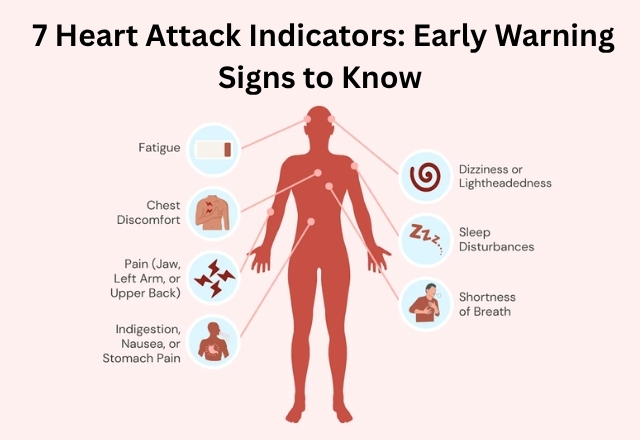
7 Heart Attack Indicators to Watch For
- Unusual Chest Discomfort
This is probably the symptom everyone thinks of first.
Chest discomfort isn’t always sharp pain. It can feel like pressure, squeezing, heaviness or fullness in the middle of your chest.
It may also. Go instead of staying there continuously. That’s one reason people sometimes convince themselves that it’s nothing
- Shortness of Breath
Feeling unusually out of breath is another sign to pay attention to.
You might notice it while walking, climbing stairs or doing something that normally wouldn’t leave you struggling for breath. In some cases shortness of breath can happen even when you’re sitting still.
It can occur with chest discomfort or on its own, which makes it particularly easy to overlook.
- Unusual or Extreme Fatigue
This one is easy to dismiss.
Maybe you’ve had a day but suddenly feel completely drained. Ordinary tasks seem harder than they normally would. You can’t really explain why.
There are plenty of reasons for feeling tired of course.. If the fatigue is unusual for you or comes with other symptoms it’s worth taking seriously.
- Discomfort in the Arm, Shoulder, Back, Neck or Jaw
Heart-related discomfort doesn’t always stay in the chest.
You may feel pain or pressure in your arm, shoulder, neck or jaw instead. It can happen in one area or several at the time.
That’s why the absence of chest pain doesn’t automatically mean your heart isn’t involved.
- Nausea, Indigestion or Stomach Discomfort
Sometimes a heart problem can feel surprisingly similar to a stomach.
You might experience indigestion or have discomfort in your upper stomach. Most of the time these symptoms will have a simpler explanation, such as something you ate.
If they’re happening along with chest discomfort, shortness of breath sweating or other warning signs don’t simply assume it’s indigestion.
- Dizziness, Lightheadedness or Fainting
Suddenly feeling dizzy or lightheaded can happen for reasons.
You might simply need food, water or rest.. When dizziness appears suddenly or happens alongside other possible heart symptoms it’s something you shouldn’t casually brush aside.
Fainting or feeling like you might pass out deserves attention.
- Sudden Sweating or Weakness
Breaking into a sweat for no reason can also be a warning sign.
Some people describe a wave of weakness or a feeling that something is seriously wrong. On its own, sweating doesn’t necessarily mean you’re having a heart attack.
When it appears together with symptoms such as chest discomfort, nausea, shortness of breath or dizziness it becomes much more concerning.
Symptoms Can Be Different in Women and Men
Heart attack symptoms can overlap a lot between men and women but they’re not always identical.
Women may experience symptoms such as tiredness, shortness of breath, nausea or discomfort in the back or jaw sometimes without the obvious chest pain people usually expect.
Men can also experience these symptoms so there’s no rule that says one symptom belongs to men and another belongs to women.
The safest approach is to pay attention when something feels unusual and seek advice when you’re concerned.
What Is a Silent Heart Attack?
A silent heart attack is what it sounds like: a heart attack that happens with very mild, unusual or sometimes unnoticed symptoms.
Because there may not be chest pain someone might mistake the symptoms for tiredness, indigestion or simply having a bad day.
That’s one reason regular health checkups matter particularly if you have risk factors for heart disease.
Who Is at Risk?
Several things can increase your risk of heart disease and heart attack including:
blood pressure
High cholesterol
Diabetes
Smoking
Being overweight
Not getting enough physical activity
A family history of heart disease
Older age
Previous heart disease
Having one of these risk factors doesn’t mean you’re going to have a heart attack. It simply means it’s worth paying attention to your heart health and discussing your risk with a doctor.
Taking Better Care of Your Heart
There isn’t one complicated secret to protecting your heart.
Eating a diet, staying physically active, avoiding smoking, maintaining a healthy weight and keeping conditions such as blood pressure, cholesterol and blood sugar under control can all help.
Regular checkups are useful too especially if you already have risk factors.. If your doctor has prescribed medication, take it as directed.
None of this sounds particularly exciting. It’s the everyday stuff that can make a real difference over time.
When Should You Get Emergency Help?
Don’t sit at home trying to figure out whether your symptoms are “serious enough.”
Severe or persistent chest discomfort, trouble breathing, fainting or pain that spreads to the arm, jaw, neck, back or shoulder can be signs of a heart attack. Require urgent medical attention.
If you think you or someone else may be having a heart attack contact your emergency services immediately.
The Bottom Line
Heart attacks don’t always happen the way we expect them to.
Sometimes the symptoms are obvious. Sometimes they’re surprisingly mild.. Sometimes they look like something completely unrelated such as indigestion or ordinary tiredness.
The important thing is to listen when something feels seriously wrong. You don’t need to figure out the diagnosis yourself.
When it comes to heart attack symptoms, getting checked and finding out that everything is okay is far better than waiting too long.