


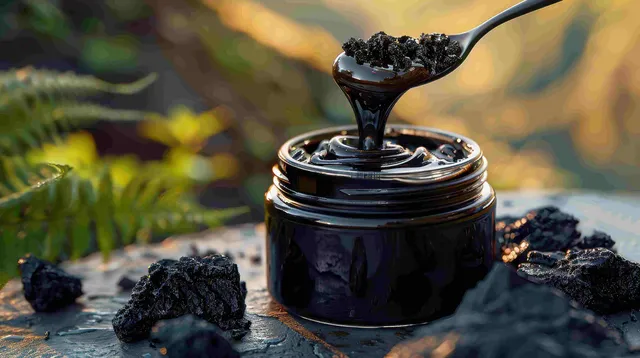
Shilajit is a naturally occurring, dark, sticky substance that develops over long periods as plant material and other organic matter break down in mountainous regions. It has been used traditionally in Ayurvedic medicine for centuries and is commonly marketed today for energy, male health, exercise performance, and overall wellness.
Modern research has started examining some of these traditional uses, but the evidence is still limited. Some early studies suggest that purified Shilajit may have potential benefits, particularly for male testosterone levels, fertility, exercise recovery, and antioxidant activity. However, more high-quality human research is needed before firm conclusions can be made.
What Are the Potential Benefits of Shilajit?
1. May Support Energy and Exercise Performance
Shilajit is often used as a natural supplement for improving energy and physical performance.
Some research suggests that purified Shilajit may help support muscle strength and reduce feelings of fatigue following exercise. Its naturally occurring compounds, including fulvic acid, may also contribute to its antioxidant properties.
For people who exercise regularly, these effects may potentially support recovery and overall physical performance, although more research is needed to determine how significant the benefits are.
2. May Support Male Testosterone Levels
One of the most researched uses of Shilajit is its potential effect on male reproductive health.
Some human studies have reported increases in total testosterone and other hormone levels after regular use of purified Shilajit. Testosterone plays an important role in muscle maintenance, sexual health, energy, and reproductive function.
However, Shilajit should not be considered a replacement for medical treatment for low testosterone. Anyone experiencing symptoms of hormonal problems should speak with a healthcare professional.
3. May Support Male Fertility
Shilajit has also attracted attention for its possible role in male fertility.
Early research indicates that purified Shilajit may have a positive effect on certain markers associated with male reproductive health, including sperm-related measures and hormone levels.
These findings are promising, but the evidence is still developing. More large-scale clinical studies are necessary to determine how effective Shilajit is for fertility.
4. May Have Antioxidant Properties
Shilajit contains fulvic acid and other naturally occurring compounds that have antioxidant activity.
Antioxidants help protect cells from oxidative stress, which occurs when free radicals outweigh the body’s ability to neutralize them.
Because oxidative stress is involved in many normal aging and disease processes, Shilajit’s antioxidant properties are one reason researchers continue to study its potential health effects.
5. May Help Support Bone Health
Bone health is another area where Shilajit has shown some early promise.
Limited research suggests that purified Shilajit may help support bone mineral density in certain groups, particularly postmenopausal women experiencing reduced bone density.
However, the available evidence is not strong enough to consider Shilajit a proven treatment for osteoporosis or other bone conditions.
For maintaining healthy bones, adequate calcium, vitamin D, protein, resistance exercise, and medical care when necessary remain much more established approaches.
6. May Help With Inflammation and Oxidative Stress
Some of the compounds found in Shilajit have demonstrated antioxidant and anti-inflammatory activity in early research.
This has led scientists to investigate whether Shilajit may help the body manage oxidative stress and inflammatory processes.
Much of the evidence, however, comes from laboratory or animal research, so these effects should not be assumed to occur in humans to the same degree.
7. May Support the Immune System
Fulvic acid and other compounds found in Shilajit are being studied for their potential biological effects, including antioxidant and immune-related activity.
Some laboratory research has explored possible antimicrobial and antiviral properties, but there is currently not enough human evidence to say that taking Shilajit can prevent or treat viral infections.
It should therefore be viewed as a supplement rather than a treatment for infections.
8. May Support Iron Levels
Shilajit naturally contains various minerals, including iron, which is essential for producing hemoglobin and transporting oxygen throughout the body.
Some research has investigated whether Shilajit may influence iron-related processes. However, Shilajit should not be used as a substitute for medically recommended iron treatment if someone has iron-deficiency anemia.
If you suspect you have low iron, a blood test and professional medical advice are the safest way to determine the cause and appropriate treatment.
9. May Help the Body Respond to Stress
Shilajit is traditionally classified as a substance that may help the body adapt to physical and environmental stress.
Some early research has explored its potential effects on fatigue, stress responses, and overall resilience. However, much of the evidence comes from animal studies, meaning there is still considerable uncertainty about how Shilajit affects stress in humans.
More well-designed human trials are needed.
What Is Fulvic Acid in Shilajit?
Fulvic acid is one of the major naturally occurring compounds associated with Shilajit.
It has antioxidant properties and is thought to contribute to several of the biological effects being investigated in Shilajit research.
However, the presence of fulvic acid alone doesn’t mean that every Shilajit product will provide the same benefits. The quality, purity, processing method, and concentration of active compounds can vary considerably between products.
How Is Shilajit Taken?
Shilajit is commonly sold in several forms, including:
- Resin
- Powder
- Capsules
- Tablets
The exact amount to take depends on the specific product and its concentration. There is no universally established dose that has been proven safe and effective for everyone.
Some clinical studies have used doses in the range of a few hundred milligrams per day, but this does not mean the same amount is appropriate for every person.
Always follow the dosage instructions provided by a reputable manufacturer or advice given by your healthcare professional.
Is Shilajit Safe?
The safety profile of Shilajit is not fully established because high-quality human research remains limited.
Purified and properly processed Shilajit appears to have been tolerated reasonably well in some studies, but this doesn’t mean every Shilajit product is safe.
The biggest concern is often product quality.
Raw or poorly processed Shilajit can potentially contain unwanted substances or contaminants, including heavy metals. This is why choosing a purified product from a reputable manufacturer is important.
How to Choose a Good Shilajit Supplement
If you’re considering Shilajit, product quality should be one of your biggest priorities.
Look for products that:
- Clearly state that the Shilajit has been purified
- Provide information about the ingredients and amount per serving
- Come from an established manufacturer
- Have independent laboratory testing
- Provide contaminant or heavy-metal testing when available
- Avoid making unrealistic claims about curing diseases
Avoid raw or unprocessed Shilajit from unknown sources. A product being labeled “natural” does not automatically mean it is safe or free from contaminants.
Can Shilajit Interact With Medicines?
Potential interactions are not well understood because there isn’t enough human research on Shilajit and medications.
If you’re taking prescription medicines, hormone-related treatments, supplements, or medications for a chronic condition, it’s a good idea to speak with a healthcare professional before using Shilajit.
This is particularly important if you’re considering Shilajit for testosterone, fertility, or another health condition that already requires medical treatment.
Possible Side Effects of Shilajit
There isn’t enough evidence to create a complete list of Shilajit’s possible side effects.
Some people may experience unwanted reactions, and allergic reactions are possible with any supplement.
Stop using the product and seek medical attention if you develop symptoms of a serious allergic reaction, such as:
- Difficulty breathing
- Swelling of the lips, tongue, throat, or face
- Severe dizziness
- Widespread hives
- Difficulty swallowing
- Rapid heartbeat
Taking more Shilajit than recommended is also not advisable. There isn’t enough evidence to establish a safe upper limit for excessive doses.
Who Should Be Careful With Shilajit?
Because research is limited, certain people should speak with a healthcare professional before taking Shilajit.
This includes people who:
- Take prescription medications
- Have an existing medical condition
- Are being treated for hormone-related problems
- Are trying to address fertility problems
- Have concerns about iron levels
- Are pregnant or breastfeeding
A healthcare professional can help determine whether Shilajit is appropriate for your individual situation.
Shilajit has a long history of traditional use and is now being studied for several potential health benefits. Early research suggests that purified Shilajit may support areas such as energy, exercise recovery, male testosterone levels, fertility, antioxidant activity, and bone health.
However, many of the claims surrounding Shilajit are stronger than the available scientific evidence. It should not be viewed as a cure-all or replacement for medical treatment.
If you decide to try Shilajit, choose a purified, independently tested product from a reputable source and follow the recommended serving size. If you take medication or have an existing health concern, talk with a healthcare professional before adding it to your routine.